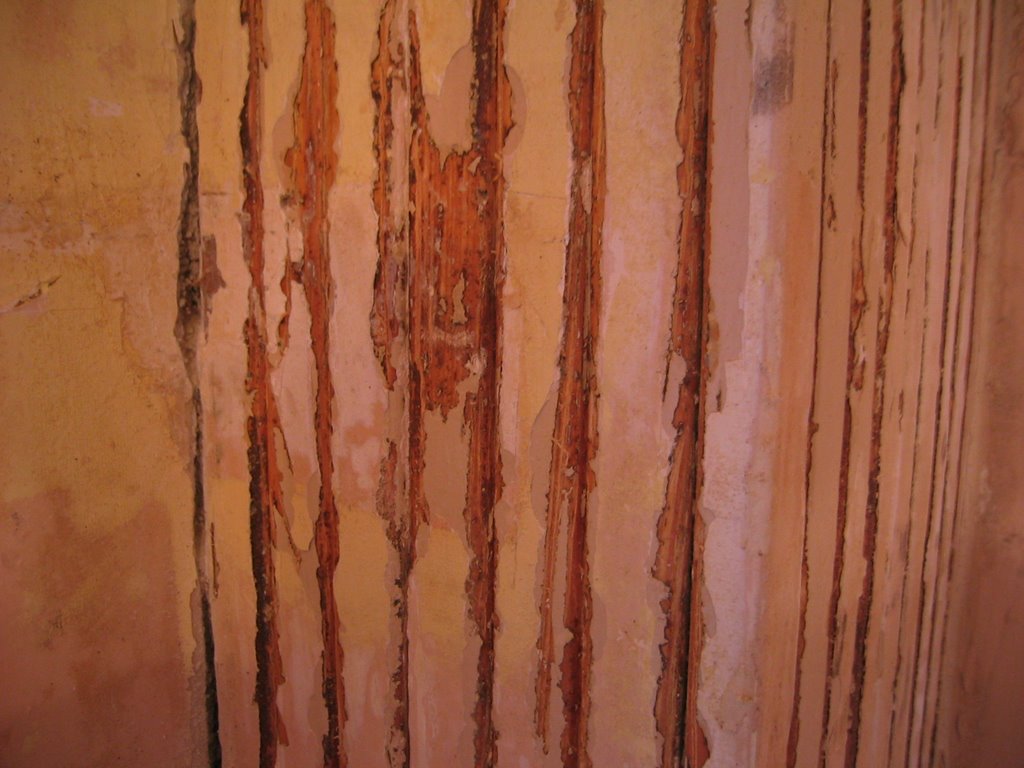
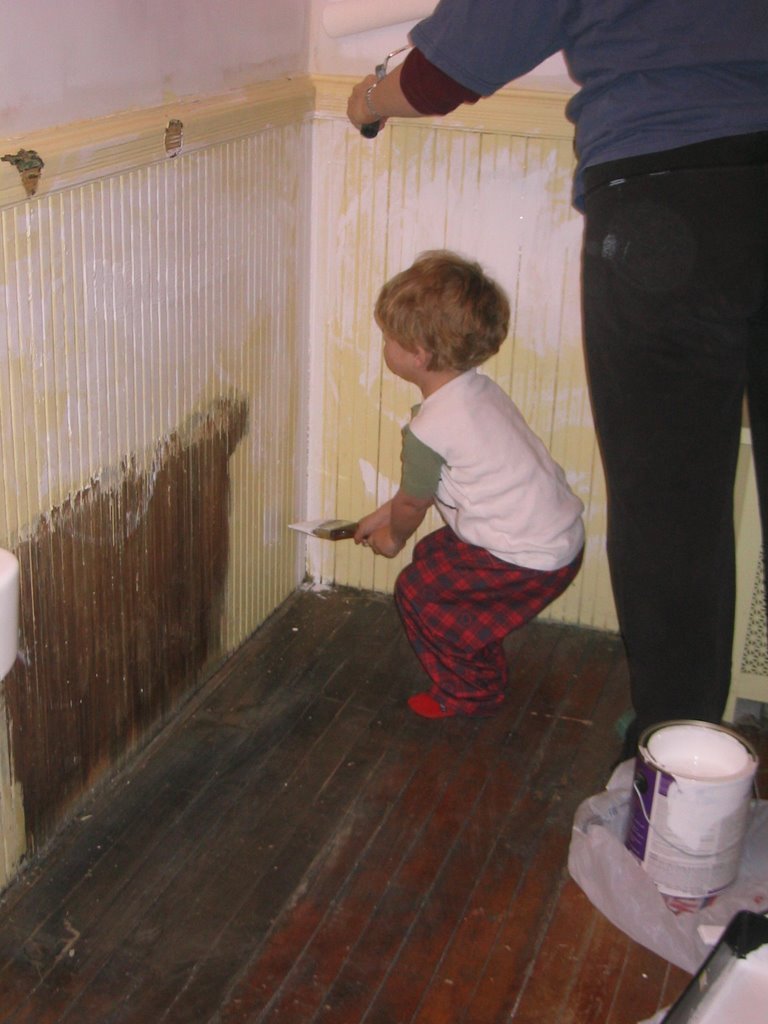
This is my Hoosier cabinet. I love it. I love it dearly. My Mom found it at a yard sale in about 1990. It was painted red. [Yes, someone painted it. Oy.] In addition to it's overall charm, Mom noticed the original Sellers tag, most of the original hardware, the sugar dispenser, the covered tin bread drawer and several original glass spice jars. Recognizing the value of the piece, MafiaMom found a talented restoration pro, had it stripped and refinished, and had one of the glass doors replaced. While the restoration may have diminished its value in the official antique marketplace, it revived this old lady, and brought an antique gem into our family.
Several years ago, MafiaMom visited my apartment in J.P., saw the perfect spot for the cabinet, and offered to sell it to me. At first, I was conflicted. I didn't love the style. It was heavy and old and expensive and fiddly. But Wifey loved it, so we bought it (and spent the next several years paying Mom in dribs and drabs).
I've had Hoosier Cabinets by Philip Kennedy on my Amazon wish list and someday I'm going to buy it. Among other things, it'll tell me what year my Hoosier was built, which parts are original and give me a roadmap for maintaining my little antique gem. I've started hunting eBay for replacement hardware because the old hardware on Ms. 1890's kitchen cabinets is similar, and when we renovate the kitchen, I'd like to use antique hardware that matches my cabinet. In addition, I'm saving digital copies of vintage ads so I can design my kitchen with the period in mind. Without that classic text about my cabinet, I've been completely ignorant of her history. Even without the book, I've very recently started to find her history here and there.
Hoosiers are generally considered 'depression era' pieces, so I always assumed it was built in the 1930s. But I've recently discovered some Sellers advertisements from the early 1900s, and I'm fairly sure mine was built in 1917. I used to envision the kind of family that could afford such a beautiful cabinet during the depression, and I couldn't relate to their life at all.
But now that my cabinet was born in 1917, I envision a world of possibilities. Was her first owner a wife and mother? A wife and mother and activist? A lady in a boston marriage? Instead of envisioning a woman kneading dough to feed her family, I envision Mrs. Agnes Moray, Miss Janet Fotheringham and Miss Lucy Burns perched on stools over the porcelain counter, writing letters, planning demonstrations, coordinating support for their jailed sisters, succeeding in NY State -- not realizing that they would be jailed together at Occoquan. And then I envision them, three years later, setting glass goblets on the porcelain counter, pouring cordials, and toasting their victory.
Little did these ladies realize that 90 years later the same porcelain counter would hold poster paint belonging to the boy child of lesbian moms, and the glass cabinet would house a porcelain mug inscribed with Votes For Women in honor of Alva Vanderbilt Belmont's sassy hospitality:
Mrs. Alva Vanderbilt Belmont (1853-1933), born in Alabama, grew up as a Southern lady. Upon marrying into the wondrously rich Vanderbilt family, Alva focused her impressive energies on winning over New York Society. Her divorce from William Vanderbilt and ensuing marriage to, even richer, Oliver Belmont caused a sensation. The scandal forced the hitherto sheltered society dame to reconsider women's position.Since I will not be spending $6500 on 4 pieces of the original china ( ... don't think I didn't consider it ... ), perhaps I should start collecting the reproduction Votes For Women china. Wouldn't that be a wonderful way to honor the history of my Hoosier?
When the Women's Trade Union League in 1909 supported the garment workers' on strike. Mrs. Belmont personally went on the streets of New York City; into the city's jailed and bailed out the arrested strikers. This strike was her initiation into the woman's suffrage movement. She established her own Political Equality League, paid for the office space for a national NAWSA office in New York City, and underwrote a national press bureau for the association. While her sudden plunge into the movement aroused some skepticism, her commitment proved enduring.
When radical Alice Paul broke off from NAWSA, Mrs. Belmont left the NAWSA to become one of Paul's most significant supporters. It was at her famous home, Marble House, in Newport, Rhode Island that Alice Paul and her cohorts formulated their plan to hold President Wilson and the Democrats responsible for the lack of progress on woman suffrage.
Mrs. Belmont commissioned her own set of "Votes for Women" china for a major Suffrage dinner party at Marble House. When the dinner was over, each guest was given a place setting to take home. "